PC Locs White Paper Exposes Hidden Costs of 1:1 Device Programs
The reality behind the numbers
By 2026, all Australian schools must comply with national device ratios: one device for every three primary students and one device per secondary student.
On the surface, these programs promise digital equity and innovation. In practice, however, IT departments are drowning in daily device repairs, loaner distribution, and support tickets — leaving little time for strategic priorities:
“Many schools think the hard part ends once devices are purchased. In reality, that’s when the real work begins,” said James Symons, CEO of PC Locs. “Our survey shows the hidden costs of 1:1 programs aren’t just financial — they’re measured in lost learning time, IT staff burnout, and sustainability crises that put educational progress at risk.”
Download the whitepaper.
Five hidden cost drivers of 1:1 programs
The white paper identifies five underlying challenges that consistently drain resources and reduce instructional time:
1. Frequent device breakages
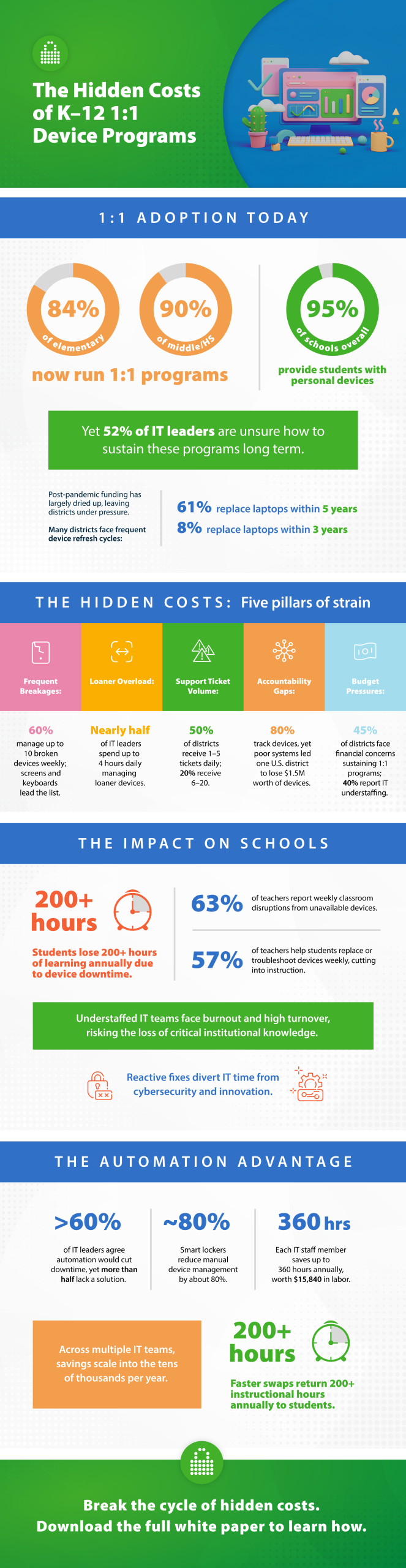
More than 60% of districts manage up to 10 broken devices weekly, most often due to screen and keyboard damage, creating repair backlogs that leave students without working devices.
2. Inefficient loaner processes
Nearly half of IT leaders report that students frequently request loaners for broken or forgotten devices. Without automated systems, teachers and librarians are pulled away from instruction to manage checkouts.
3. Rising volume of support tickets
Half of surveyed districts receive 1–5 device-related support tickets daily, and 20% receive up to 20 per day. More than half lack automated ticketing systems, forcing IT staff to manage requests manually.
4. Weak tracking and accountability
Although 80% of schools use tracking systems, many rely on spreadsheets or siloed tools. This leads to accountability gaps — in one U.S. district, poor tracking contributed to $1.5 million worth of missing devices.
5. Unsustainable budget pressures
Nearly 52% of schools express concerns about sustaining their 1:1 programs long-term, and more than half admit they have no plan in place to cover the growing costs.
Together, these challenges create a cycle of inefficiency that strains budgets, reduces learning time, and fuels IT staff burnout.
Smart lockers: A practical solution
The white paper highlights FUYL™ Smart Lockers as a scalable, cost-effective solution to these challenges. By automating device loaning, charging, deployments, and repairs, smart lockers free IT teams from daily manual tasks and ensure students have access to learning-ready devices.
Analysis shows that smart lockers save up to 360 IT staff hours annually per team member — equal to AUD 33,480 in labour costs* — while also recovering 200+ hours of classroom instruction time.
A visual look at the findings
At a time when schools are investing more than ever in technology, we wish this white paper painted a more optimistic picture. Instead, the data reveals mounting operational and financial pressures threatening the future of 1:1 device programs.
That’s why we’ve distilled the most eye-opening insights into a compelling infographic. From device breakage rates to budget sustainability concerns, this quick visual snapshot highlights the challenges IT leaders face every day and why automation is no longer optional.