JNUC 2026 Recap for Apple Admins: What Matters Most from the Jamf Keynote
Every year, thousands of Apple administrators, IT leaders and education specialists tune into the Jamf Nation User Conference (JNUC) to understand what’s next for Apple in the enterprise and education.
For the fifth consecutive year, Compnow’s Apple and Jamf expert Damian Cavanagh has broken down the keynote into a practical recap focused on the announcements that matter most to Australian Apple administrators.
This year’s keynote signalled a major shift in how Jamf sees endpoint management evolving. Rather than simply managing devices, Jamf is building towards autonomous device management, where platforms can monitor health, automate workflows, govern AI usage and help administrators move faster with less manual effort.
First, a Major Recognition for Compnow
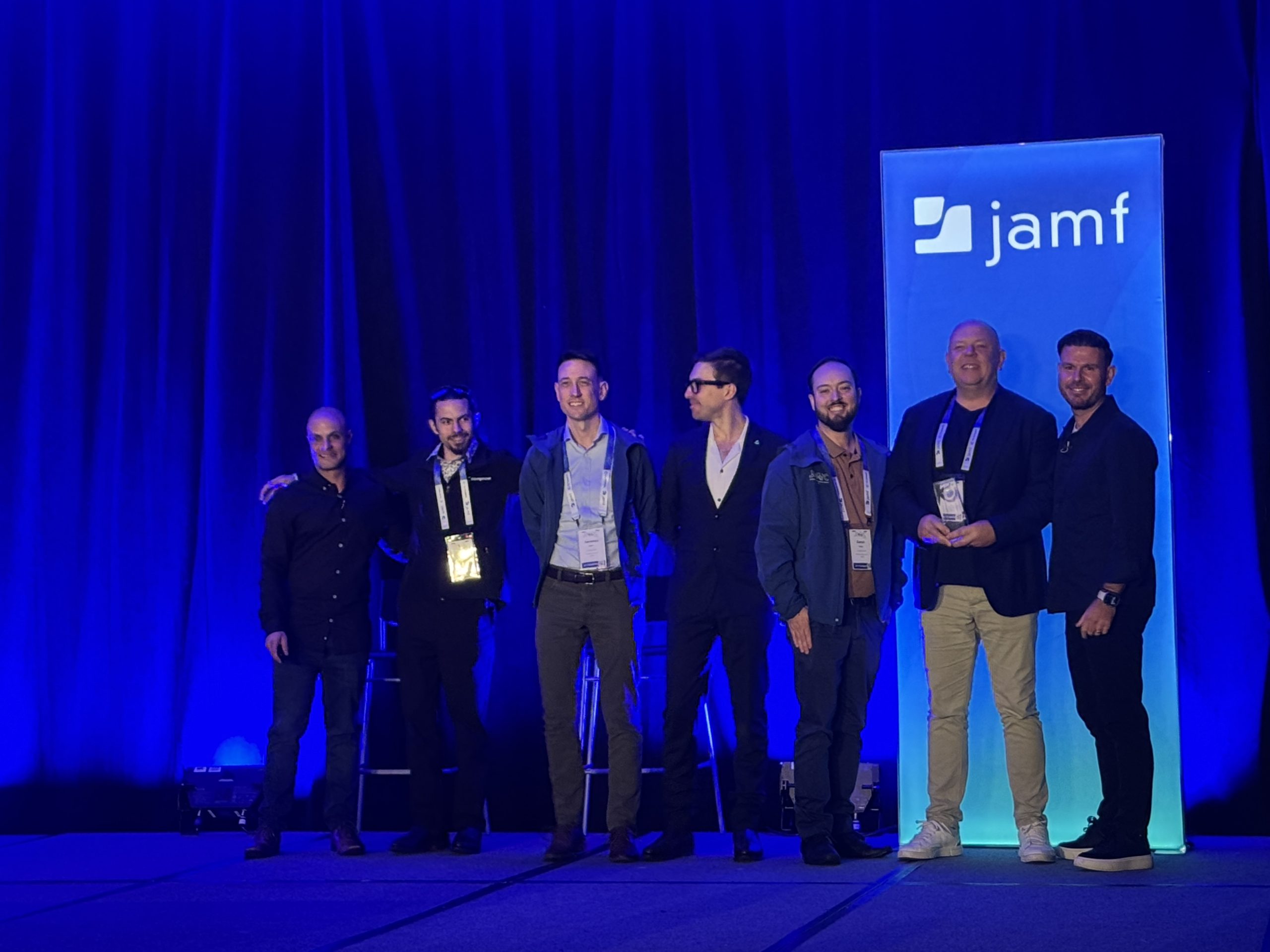
Before diving into the keynote announcements, we were proud to share that Compnow has been named the 2026 Jamf APAC Value Added Reseller Strategic Partner.
This recognition reflects the strength of our partnership with Jamf and the work our team does every day helping organisations across Australia deploy, manage and secure Apple devices at scale.
Whether it’s zero-touch deployment, identity integration, lifecycle management, security services or Apple adoption programs, our goal remains simple: helping customers get more value from their Apple investment.
A New Era Under Jamf CEO Beth Tschida
JNUC 2026 marked the first keynote led by Jamf CEO Beth Tschida.
Her message was clear: it’s time to “Power Up”.
Jamf’s vision centres around three key pillars:
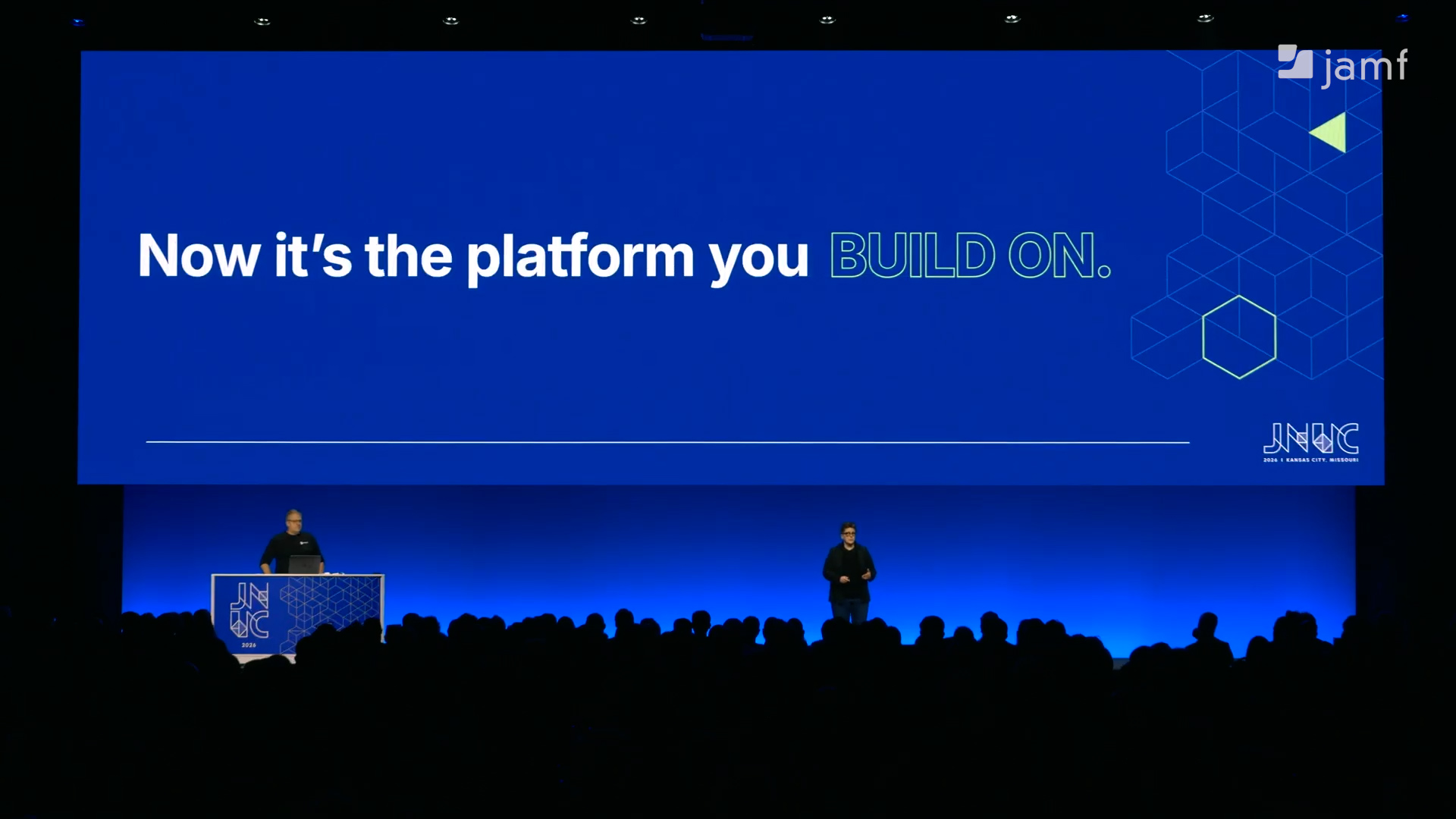
Platform-wide APIs that allow organisations to build on Jamf rather than wait for feature roadmaps
A user experience designed around modern IT workflows
AI integrated directly into management processes rather than existing as a standalone feature
For Apple administrators, it was a strong statement that endpoint management is becoming more intelligent, more automated and far more integrated with the broader IT ecosystem.
Apple Continues Its Enterprise Momentum
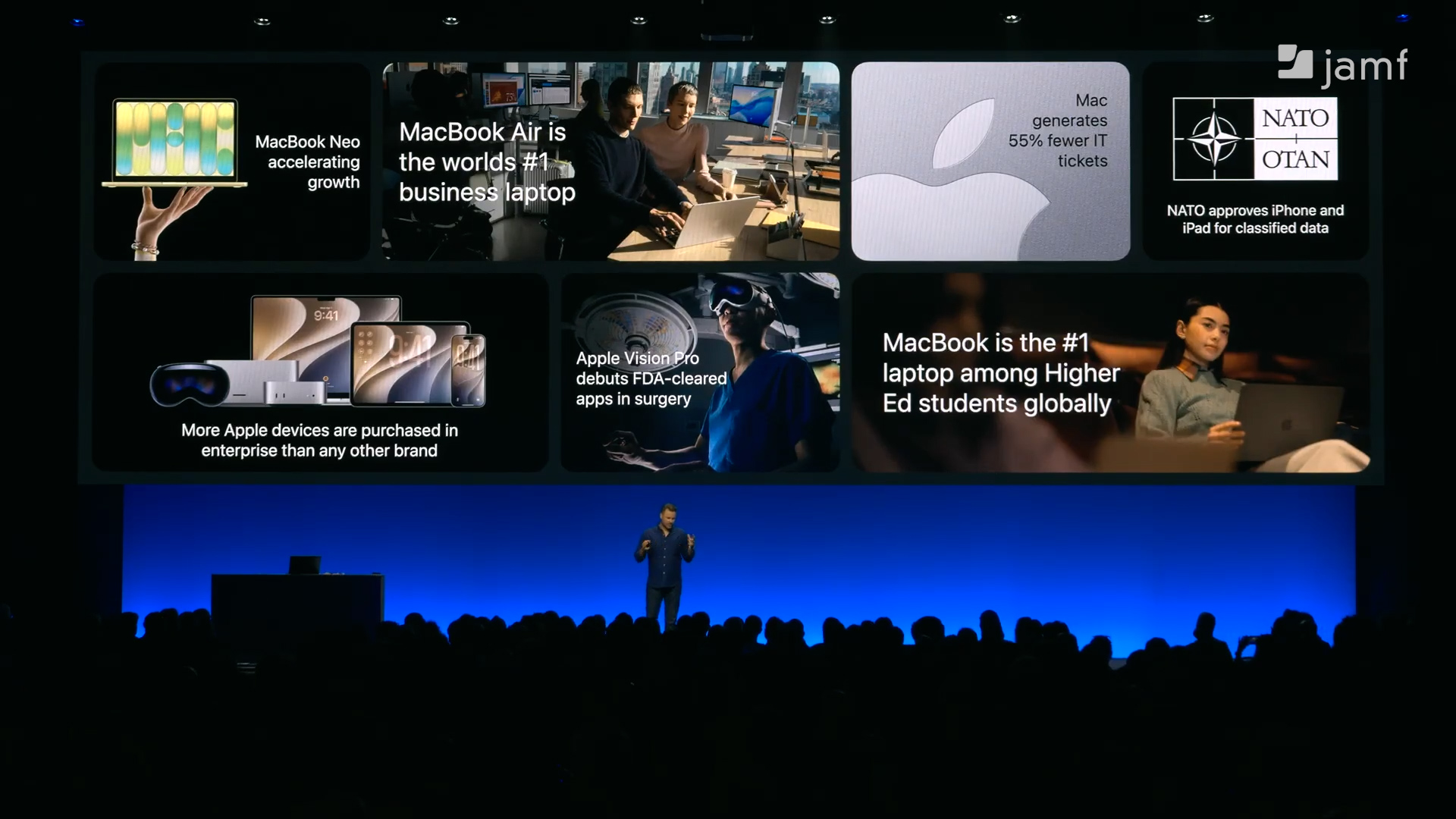
Apple’s Jeremy Butcher took the stage to reinforce a trend many administrators are already seeing firsthand.
According to Apple, there are now more Apple devices in enterprise environments than any other brand, with MacBook Air remaining the most-used business laptop.
The company also highlighted continued investment in enterprise-focused capabilities including:
Enhanced AppleCare workflows
MDM-enabled support diagnostics
Ongoing platform SSO improvements
New management capabilities in the upcoming operating system releases
The message was straightforward: Apple’s commitment to business and education environments continues to deepen.
Blueprints Become the Future of Apple Management
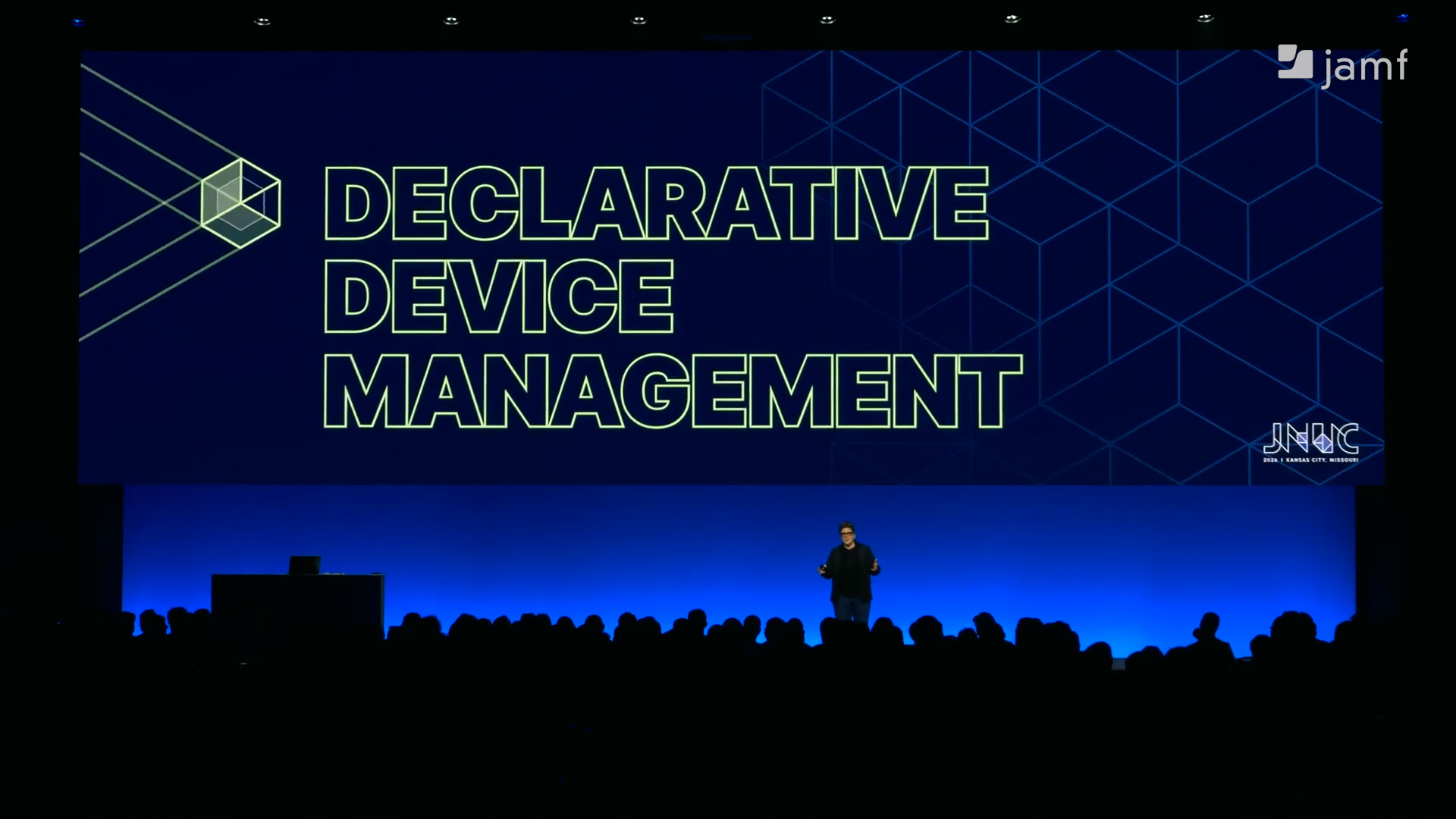
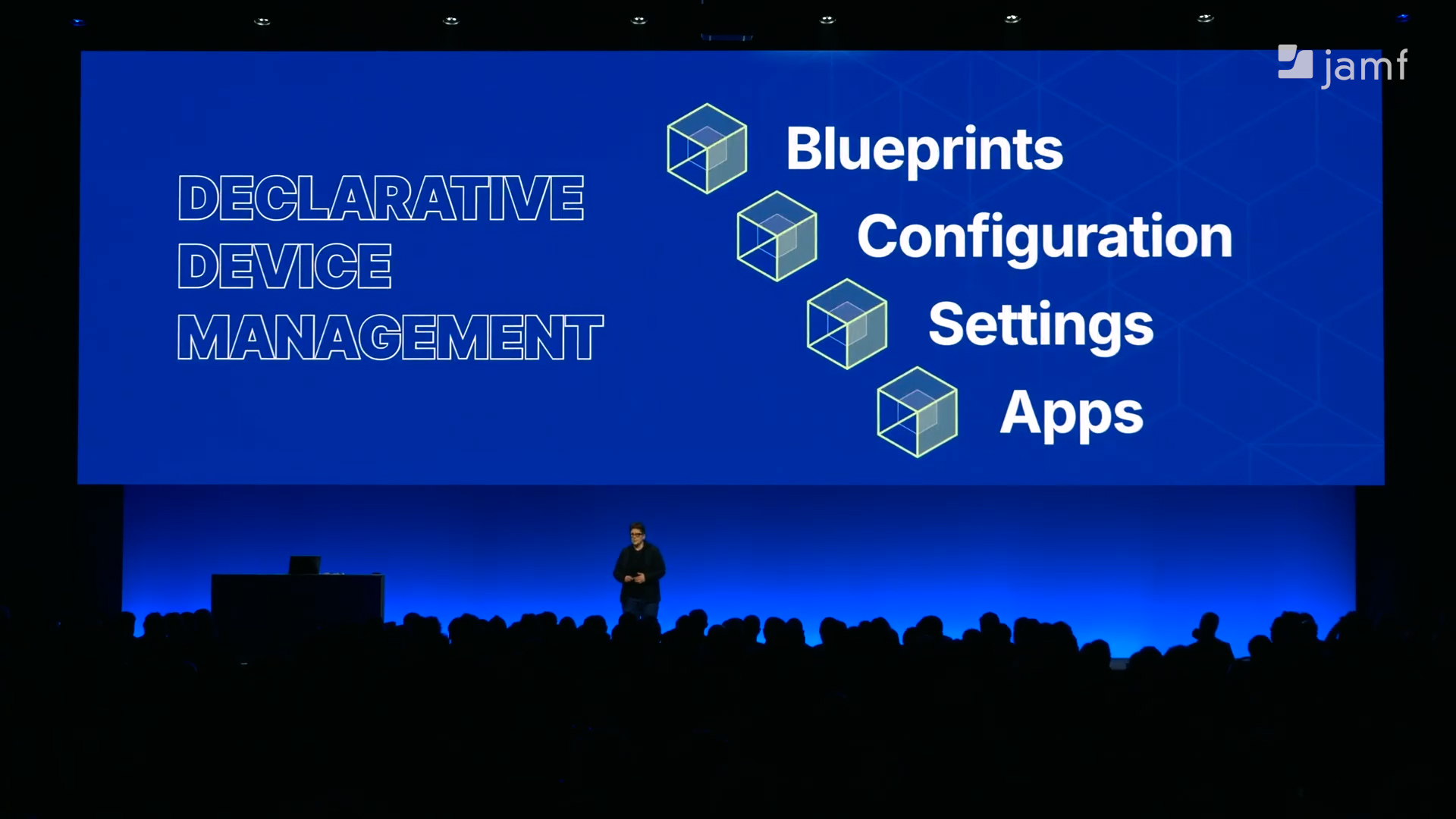
A significant portion of the keynote focused on Jamf Blueprints.
Originally introduced as Jamf’s declarative management framework, Blueprints has now evolved into the centrepiece of device configuration and application management.
Highlights included:
Improved scoping and visibility
Greater auditability
Native app lifecycle management
Support for App Store and non-App Store applications
Infrastructure-as-code workflows through Git-based management
For administrators looking to modernise Apple management practices, Blueprints appears set to become a foundational capability.
AI Governance Moves Front and Centre
Perhaps the biggest theme of JNUC 2026 was AI.
Jamf cited data showing that 98% of organisations now have some form of unmanaged or “shadow AI” operating on endpoints.
To address this challenge, Jamf announced significant expansion of its AI Governance capabilities, including:
Visibility into AI application usage
Browser-based AI monitoring
Policy-driven AI controls
Token consumption and cost insights
Usage reporting and governance controls
The goal is not to block AI adoption, but to enable organisations to embrace it safely and responsibly.
For many Australian organisations currently developing AI governance strategies, these announcements may prove particularly relevant.
On-Device AI Becomes a Reality
One of the most interesting demonstrations from the keynote was Jamf’s approach to local AI models running directly on Apple Silicon.
Rather than relying exclusively on cloud-based services, organisations will be able to:
Deploy local AI models through Jamf
Route prompts through controlled gateways
Keep sensitive information on-device
Reduce cloud AI costs
Apply governance policies consistently
As organisations explore how AI fits within security and compliance frameworks, the ability to keep data local could become increasingly important.
Device Health Takes a Bigger Role
Jamf also introduced Device Health as a continuous monitoring capability for Macs.
Rather than relying solely on traditional management data, Device Health provides ongoing visibility into:
Performance
Stability
Memory usage
Battery health
Storage utilisation
Combined with automation workflows and staged software rollouts, the solution aims to help organisations detect issues before users submit support tickets.
It’s another example of Jamf moving from reactive management towards proactive operations.
What This Means for Australian Apple Admins
The strongest theme across JNUC 2026 was convergence.
Device management, automation, AI governance, endpoint health and modern workflows are no longer separate disciplines. Jamf is bringing them together into a single platform approach.
For Apple administrators, the opportunity is clear:
Less manual administration
Better visibility across fleets
Safer AI adoption
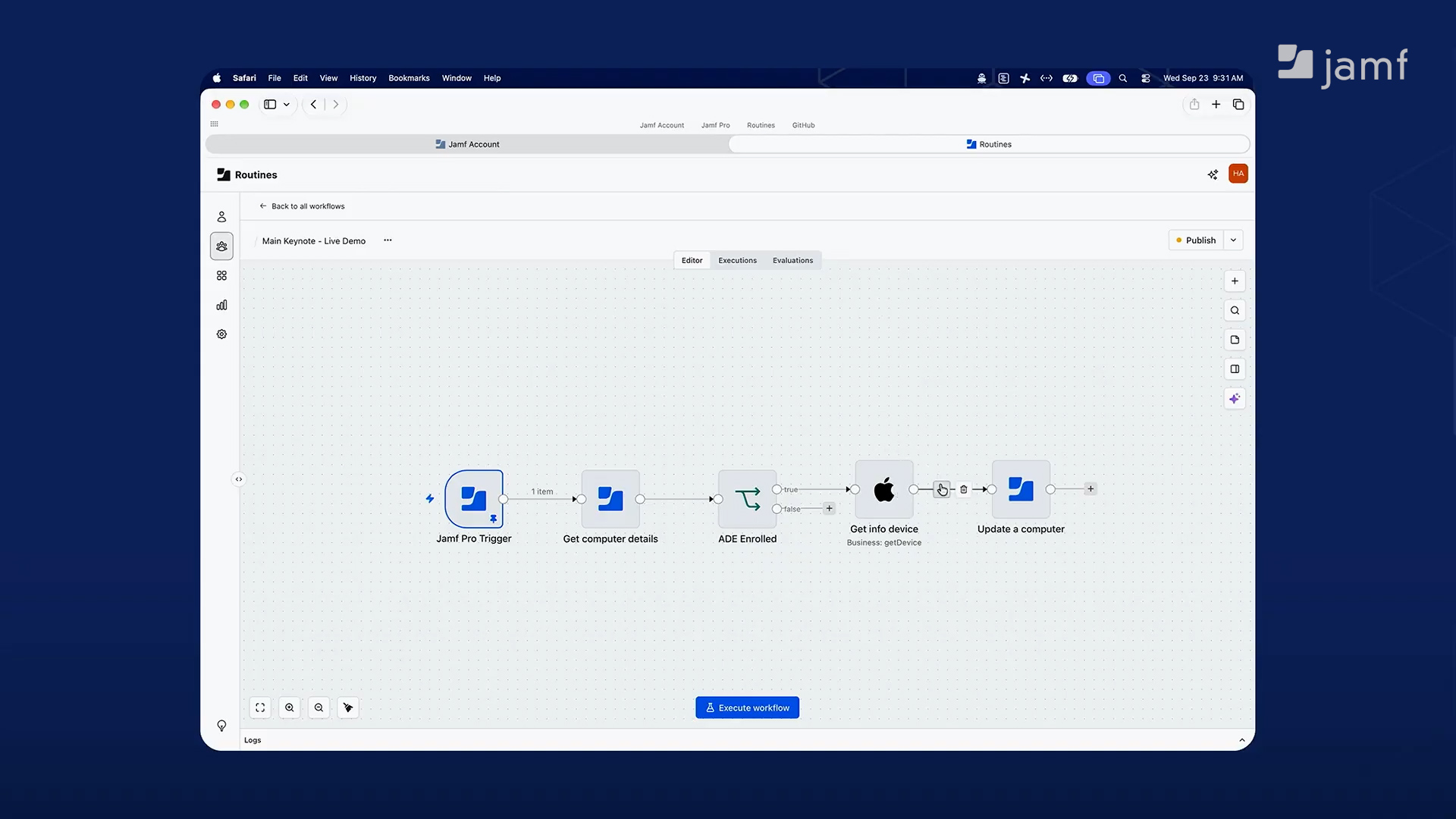
More automation
Improved user experiences
Many of these capabilities are already entering beta today, with broader availability expected across the coming months.