The Benefits
It may seem counter-intuitive that waste can be reduced by regularly turning over equipment, but HP, in this instance, and Compnow’s approach to device lifecycle management generally, is to refresh equipment at the point that maximises ROI.
“By refreshing each device at the 3-year mark we save money and stop devices going to landfill. If we kept them for another, say, two years, we’d be facing higher licensing expenses and increasing reliability costs. We also want to avoid reputational issues as Curtin prides itself on providing students and staff with the best. And at that point, devices have great re-sale value for us. They are prepared and on-sold to a new owner who does not have the same high capacity requirements. The devices are capable of providing adequate service for potentially another 5 years. And as HP’s components can be recycled, it’s re-use rather than the bin. It’s all win,” Jared says.
Curtin also offers the example of its monthly order of 100 HP Elite devices. The Elite is EPEAT (Electronic Product Environmental Assessment Tool) Gold certified, which ranks the environmental effect of a product. And with HP and Compnow’s complete, responsible lifecycle management, “at 1.32 kg per device, that’s about 100kg a month not going to landfill – you can feel good about that”, he says.
Small changes add up to large improvements. Compnow supplies every new laptop in a ProCycle bag made from 80% recycled materials and, Jared says, “the added bonus is that they are cheaper – we saved $5,000 last year”.
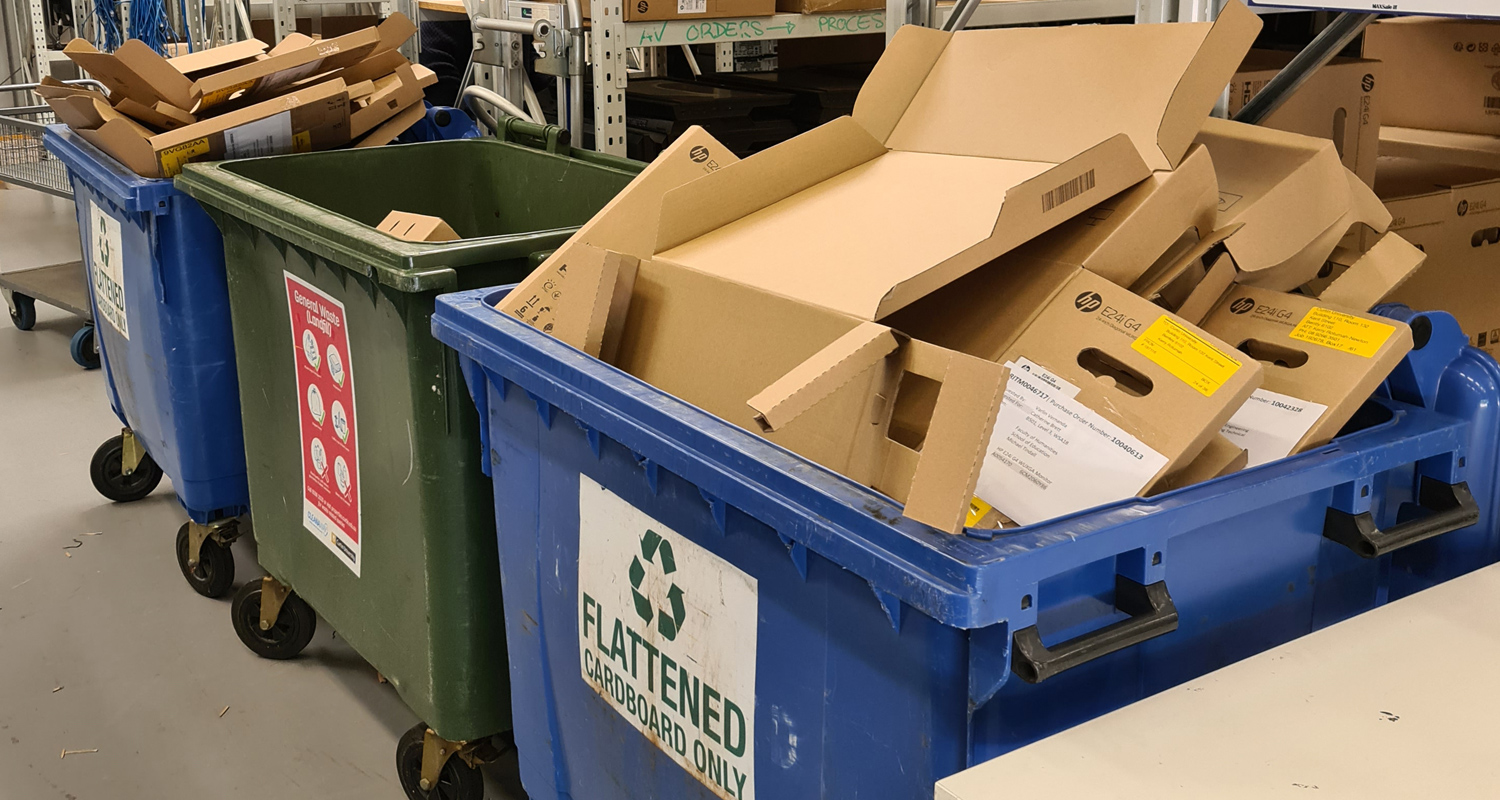
The Asset Management team has to deal with all the day to day waste generated by IT. Jared says: “Our mountain of waste was terrifying. Our job is to enable technology use and we were spending large amounts of each day coping with rubbish. We had cardboard – 10 to 15 commercials bins per week – as well as toxic styrofoam & single use plastics. That created a time wasting monster, took up expensive warehouse space, and cost us in different forms of waste removal. And we’re only one university, in one city. The problem is huge.”
But one small change has made a vast difference. Curtin required its suppliers to shift to using all paper/cardboard.
“Rather than standing at the bins separating boxes from styrofoam inners, we can spend time with customers helping them with their technology. The changes we’ve made in the last couple of years have been really positive for our team and their job satisfaction.
“Doing our bit for the planet and its communities is exciting. Having eliminated the plastic, we’ve taken the guilt and manpower out of managing our packaging disposal,” he says.